
Beyond the Clinical: How Social Workers Drive Kidney Transplant Success





While kidney transplant is the optimal treatment path for end stage kidney disease (ESKD), complex logistical, financial and educational barriers can often stand in the way for many patients interested in pursuing it.
The process can require rigorous medical, financial and emotional preparation. Clinical social workers help with this. In addition to guiding patients to successful transplantation, they help drive systemic efficiencies that can help reduce long-term costs and help increase access to life-saving transplant care.
The Critical Role of Social Workers as Educators and Supporters
Getting on and staying on the transplant waitlist requires understanding health information and needs, persistent advocacy, the ability to navigate complex healthcare systems. Social workers play a foundational role in this process by helping:
- Support Navigating the Process: Educating patients on the medical and logistical requirements of receiving a transplant, helping to resolve or mitigate anxiety or ambivalence the patient may be experiencing.
- Address Social Drivers of Health: Identifying and mitigating barriers such as transportation, financial instability or lack of caregiver support that could disqualify a patient from transplant eligibility.
- Provide Encouragement: Advocating for patients and helping take an active role in their care, which supports adherence and long-term outcomes.
A Personal Perspective on the Transplant Journey: Angela Laino
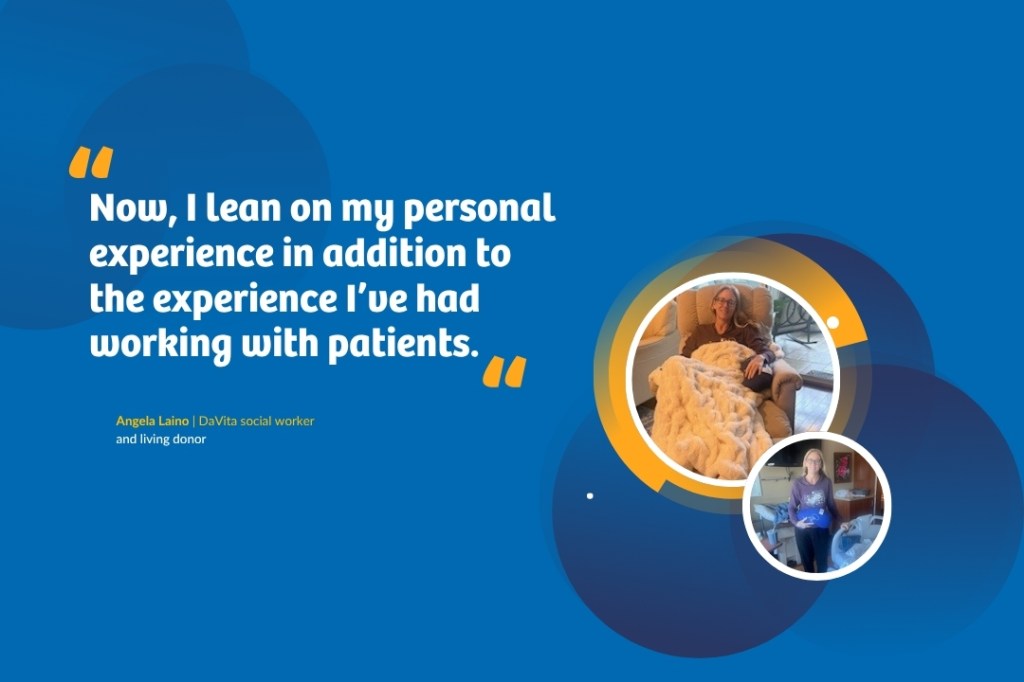
In January 2026, Angela Laino made the profound decision to become a living donor.
“I just felt like that was my purpose,” Laino says. “It really was on my heart, like something was driving me in that direction.”
Laino was already familiar with the impact living donation can have on kidney patients. As a DaVita social worker, she has supported patients in pursuing their own kidney transplant goals — educating them on the process, connecting them with transplant centers, talking through the potential to find a living donor and more.
In addition to supporting patients directly, Laino collaborates with transplant champions across DaVita and divisional lead social workers. By sharing updates on transplantation and discussing the potential impact on patients, Angela and others collaborate on ways to support field social workers in their work with transplantation and help provide the tools they need for success.
“Education — for patients and for care teams — is an ongoing dialogue,” Laino says. “Now, I lean on my personal experience in addition to the experiences I’ve had working with patients.”
By integrating her lived experiences with clinical expertise, Laino is dedicated to creating connection that resonates with patients.
“There are quite a few myths that exist around transplant — many of them are what we call modifiable barriers. These can include age, weight, tobacco use or previous cancer diagnoses,” Laino shares. “We educate in a variety of formats to help dispel those myths.”
Addressing these modifiable barriers through targeted clinical techniques, DaVita social workers are providing a scalable health model — keeping patients on track for transplant and helping address clinical and non-clinical risks for high-cost acute care.
Driving System-Wide Value Through Patient Education
When patients are adequately prepared for a transplant, the healthcare system benefits as a whole. Effective social work intervention can help support:
- Reduced Time to Wait List: Proactive education helps patients complete evaluations faster with increased trust. Studies have shown that effective education increased understanding of the evaluation process and waitlist placement while also reducing concerns about waitlist placement.
- Improved Transplant Survival Rates: Educated patients are more likely to adhere to complex post-transplant medication regimens, reducing the risk of rejection and costly readmissions.
- Optimized Resource Use: When social workers can address social drivers of health early, they can strategically help reduce risk of emergency interventions and lower the cost of care.
“At DaVita, we go beyond education. With our training, we are positioned in our centers to provide behavioral health interventions for our patients so they can break down barriers to transplant,” Laino shares.
This includes supporting patients through motivational interviewing, assessing their readiness for change and advocating for them so they have a good understanding of the expectations in the transplant journey.
“For example, if I have a patient who uses tobacco, I can provide counseling and resources to help the patient stop tobacco use,” Laino says. “If a patient needs to meet a certain goal weight to be evaluated for transplant, I collaborate with the clinic dietitian. I will also use clinical interventions, such as motivational interviewing, cognitive-behavioral and solution-focused brief counseling interventions. It is all about meeting the patient where they are and supporting them in meeting their goals. We work to empower our patients, so that they can be successful in the goals they set for themselves.”
The Systemic Value of Transplant Care
Ultimately, the journey from dialysis to a successful kidney transplant is not achieved through clinical intervention alone. It requires a holistic care model where social workers are empowered to act as educators, advocates and skilled clinicians.
By creating access to multidisciplinary care, DaVita is working to increase access to transplant for every eligible patient.